
Some people give you a map of legal surrogacy around the world and make it sound as easy as ordering a takeaway, while others make it sound like a metaphysical exercise, and it all sounds right, but as soon as you land you realize you either can't sign the contract or your child's papers are stuck. When we do cross-border surrogacy counseling on the Merrylife team, the most common turnaround is not in the question of "can we get pregnant", but in the more realistic three sentences:
- "Is surrogacy in this country open to foreigners or not?" (In many places, it's "nationals yes," but not foreigners.)
- "Who were the legal mom and dad the moment the child was born?"
- "Should I go through a travel permit or visa/passport to return to my home country?" (Choosing the wrong path can be the cost of weeks to months of detention)
Even worse: the law is updated all the time.
For example, in Russia, after the end of 2022, the restrictions on foreign surrogacy were officially tightened, and many of the old lists are still "recommending Russian surrogacy cost-effective", which is a typical "driving a new car with an old map", which is very dangerous.
Another example is the Thai surrogacy policy, which has long been highly sensitive to foreign nationals and extremely risky to enforce, so even if there are still people in the market who "beat their chests and say they can do it," you shouldn't gamble your child's person and documents in a gray area.
So we're not doing it today."Surrogacy legal countries list is a big mess". We make a 3-D assessment system that you actually use:
Legal compliance (can you sign, do you recognize the contract) + Identity access (can your kind of family do it) + Chain of documents (how can your children legally return to your country)
If all three of these things are true at the same time, then it's "really doable".
First, how to determine whether a country's surrogacy "really works"?
You can think of cross-border surrogacy as a triangle: healthcare is on the bottom edge, the law is at the apex, and documents are the piece of rebar that goes through the triangle. Anything less collapses.
1. Dimension 1: Commercial Surrogacy vs. Altruistic Surrogacy
Many people's first thought is, "Commercial surrogacy just doesn't sound safe."
Instead, I'm more wary of another scenario: a contract that says altruism but is actually toothless.
In some altruistic systems, you run into two realities:
- Expenses cannot be called "compensation" but only "reimbursement", and even the scope of reimbursement has to be interpreted in a compliant manner; in Canada, there are very clear federal legal boundaries and reimbursement caliber instructions.
- Often parental authority is not 'at birth', and surrogate mothers may still be treated as legal mothers at birth, with parental authority later transferred by court order (the UK Parental Order system is typical: the 'birthing person' is the legal mother at birth, and this is later transferred). legal mother at birth and later transferred).
My point:
Commercialization does not mean low risk, but it usually means that contractual structures, escrow payments, insurance, and liability for breach of contract are more "rule of lawable".
What really puts people to sleep is "altruism in name only, confusion in practice, lack of clarity on powers and responsibilities, and money spent but protection provisions not put into practice".

2. Dimension 2: Limitations on access:
"Can you do it" is more important than "is surrogacy legal in this country"!!!!
Are you heterosexual married? Single female? Single male? Same-sex partner? Is HIV+ involved (is the viral load undetectable)?
These are not "privacy glitches" but hard thresholds that determine whether you can enter the process, get your parental rights documents, and get your license.
The public statement from the UK official and regulatory bodies is straightforward: surrogacy applies to different family types, but legal parental rights need to be transferred by a subsequent process.
Bottom line: In many countries it's not "surrogacy is not legal", it's "you're not allowed to enter in that capacity".
3. Dimension 3: Establishment of parental authority, who is the mother legally after the birth of the child?
This is one of the most overlooked, but most consequential points in transnational surrogacy.
You just have to remember the "practical truth":
How the birth certificate is written, who can sign it, and who is the legal parent determines whether or not you will be able to get the papers and take the baby later.
The U.S. Department of State's Public Alert on ART/Surrogacy Abroad repeatedly emphasizes that citizenship/passport applications may require you to provide evidence of "genetic, gestational, and legal parentage" and that additional documentation may be required on a case-by-case basis.
That's why when you see any organization telling you, "It's legal in our country, don't worry about it," you have to ask a follow-up question:
"How does parental authority come down to earth? Who is the legal parent on the day of birth? What do the documents look like? Will it be accepted by the embassy or consulate with the return link?"
If you can't answer, don't sign.
Second, the first echelon of surrogacy countries: the "gold standard" of a mature legal system and full-process protection.
This section is written for two categories of people:
- Relatively large budget, want to minimize uncertainty
- Or have more complex identities (single/LGBT/higher cross-border documentation requirements) and don't want to rely on "luck".
1. United States (some friendly states):
One of the most common things we say at MerryLife when we do the American Pathways is:
"America is not a national policy, it's 50 states + 50 sets of practices."

Why is American surrogacy strong? Strong in two ways:
- Relative maturity of pro-rights instruments: inSurrogate Friendly States of AmericaThe program has a long history of jurisprudence and practice around the recognition of parental rights, birth documents, and hospital procedures. References to relevant family law provisions (including 7962, among others) can be found in the public materials of the California court system, as well as in the procedural entrances.
- Nationality/Chain of Evidence: The U.S. Department of State has made it very clear that the "evidence" for overseas ART/Surrogacy is very clear, and that you can't rely on the phrase "we are the parents" to get through. You can't just say "we're the parents" and get through, you have to be able to close the loop.
Applicable Population:
- Heterosexual married, unmarried partners, single, LGBTQ+, more manageable path in the right state with the right lawyer structure
- Families that value "predictable processes and verifiable documents"
- look for a way throughSurrogacy for U.S. Citizenshiphost families
The reminders we give our clients are also very nonchalant:
Don't save money on "state selection". Choose the wrong state, and the remedies that follow usually burn money on a monthly basis.
2. Surrogacy in Canada:
Relatively stable laws, but inefficient "altruistic systems"!
The central feature of Canada is that surrogacy is permitted, but commercial payments are strictly limited and there is an official definition of "reimbursable expenses".
This will have two realistic results:
- Scarcer resources for surrogate mothers (waiting times tend to be longer, as determined by market structure)
- Parental rights/birth registration emphasize more procedural arrangements after birth (rules vary by province, but overall do not have the same "lock-in-earlier" rhythm as in the United States)
I usually rate Canada:
Safe, but slow, and slow enough to be "expendable."The
If you're not time-sensitive and want a more manageable budget, Canada is negotiable, but if you're already anxious about the "age/job/visa window," don't torture yourself with Canada.
III. Second tier of surrogate countries:
This section is the most searched area: people are looking for "Cheap and Legal Surrogacy Countries".
I have to get the ugly words out of the way first:
The more cost-effective the place, the more important it is to "put lawyers and chain of custody first in the budget."
1. Surrogacy in Kyrgyzstan::
One reason for the high level of discussion about Kyrgyzstan is that many industry sources describe it as "more open".
During the verification process, we emphasize that the official version of the law database and the interpretation of the local lawyers should be used directly (as the text is subject to revision and external implementation).

Currently, the publicly available legal interpretation of the law states that Kyrgyzstan has incorporated "third-party assisted reproductive technologies (including surrogacy)" into its legal framework and regulates surrogacy contracts and rights and obligations (the industry often cites its "The Law on Third-Party Assisted Reproductive Technologies (including Surrogacy)").Laws related to public health protection(the "Clause" serves as the basis).
But, I'll make it more discreet and practical:
"open formulation of the legal text" ≠ "every organization is willing to take your identity"
especially concerningSurrogacy for single men When / same-sex couples, a lot of the pieces ultimately depend on: the clinic compliance team, the attorney issuing an opinion, and your ability to make the chain of evidence a closed loop.
We give advice on wind control:
- Don't touch "small clinics/brokers": emerging markets are the most prone to "fast money, slow delivery, messy documentation" problems
- No use for any verbal promises: only recognized execution of contracts + escrow payments + preview of the chain of credentials
- You need to think of the "path to a return travel permit" as the main line of the program, not as an afterthought (Chinese embassies and consulates have a clear framework of materials and sample pages for travel permit applications).
2. Surrogacy in Colombia:
A lot of people like Columbia because of the cost versus the expectation of being friendly to a particular family form.
But you have to understand its "legal underpinnings": it is not a full-fledged law on surrogacy, but relies more on judicial discussions, case-by-case rulings and jurisprudential frameworks.
Issues related to surrogacy were discussed by the Colombian Constitutional Court in its 2009 judgment T-968/09, which is one of the judicial sources frequently cited by outsiders.
What does that mean? Means:
- More than anything, you need a strategy to "make the paperwork so that no one can say anything" (parental authority, birth registration, translation and authentication, consistency of hospital documents).
- Medical resources should be looked at clearly: especially neonatal support capacity (NICU, etc.), which is not pretentious, but responsible for the child
My position on Colombia is:
Ideal for people who are willing to do their homework, are open to stronger case-by-case differences, and are willing to put their attorneys deeply involved.
3. Georgian surrogacy:
Georgia has long been discussed in the international market due to its early formation of the legal framework and official regulations that explicitly address assisted reproduction/surrogacy-related provisions.
But its common thresholds are also clear: stricter restrictions on marriage and family forms, and more "hard" document scrutiny.
Georgia's predictability is relatively better if you are heterosexual married and well documented;
If you're single/LGBTQ+, then don't waste your time "fantasizing that it will be accommodating" and focus on the jurisdictions that actually fit you.
4. Surrogacy in Kazakhstan: low-profile rigorists
Kazakhstan's legal system is relatively more "codified", and the framework of the Marriage and Family Code provides for the regulation of family relations and related subjects.
In practice, it tends to have stricter requirements for admission status and medical indications:
- Stable yes, butLargely closed to singles/same-sex groups
That is why Kazakhstan is more of an option "for traditional family forms that want to stabilize the jurisdiction" than an "all-access flat ride".
5. Surrogacy in Greece:
Greece is unique in that it regulates surrogacy under "court authorization", which means that you can't do it just because you want to, but you have to get a judicial authorization before the embryo transfer.
The logic of the provisions on "judicial authorization" and conditionality can be found in the English translation of the relevant Greek legislative texts.
Who is this path for?
- Obsession with "EU medical standards"
- Ability to accept longer compliance cycles and document preparation
- Prefer single women or heterosexual couples (still subject to court and attorney assessment)
Not for whom?
This is not the way to play in Greece if you want to go fast, if you want to save money, if you want to "make up materials as you go".
IV. The third tier of countries where surrogacy is legal and the "discouragement zone"
I know you may not love it, but this is the part where I have to write a little heavier:
Cross-border surrogacy is not a tourist program. If you step on the law, the consequence is not a "refund", but a "stuck child".

1. Russian surrogacy: closure to foreigners
Relevant Russian official channels and authoritative media reports indicate that restrictions on foreign surrogacy have been explicitly tightened (the common caliber is that foreigners are unable to follow the old pattern unless specific nationality/status conditions are met).
So any information that is still "pushing Russia", you treat as expired food.
2. Ukrainian surrogacy:
Ukraine was once technologically and industrially mature, but the reality is that the war environment makes "travel, logistics, documentation, embassies, consulates and security" uncontrollable variables.
For example, Australia's official travel advice maintains a long-standing high risk alert for Ukraine (the core problem with such countries is never the clinic's publicity, but the external environment).
3. South-East Asia (Thailand/Cambodia, etc.):
High-handed Law Enforcement and Criminal Risk Zones (please just cross them out)
Thailand's laws and policies have long been highly sensitive to surrogacy and the risks associated with commercial surrogacy for foreigners are extremely high; even if there are people in the market touting "pathways", you shouldn't put your family and child on the line.
In Cambodia, there have been cases of crackdowns and criminalization of surrogacy, which have been widely reported in the international media.
Our team's bottom line advice is one sentence:
Don't touch any program that requires you to "circumvent regulations, forge relationships, lie to hospitals, and go underground."
This is not a "moral judgment", it is a criminal risk + the risk of a break in the chain of credentials.
V. Why are countries that allow only "altruistic surrogacy" not necessarily safer?
This is a point that many articles reverse: "altruistic" is written as "safer".
I prefer to use a big truth:
Altruism is more like "values choice" and does not automatically equate to "process safety".
1. Common features: the legal mother often remains the deliverer at the time of birth and later transfers
The UK regulator's public statement is very clear: under the UK legal framework, the person who gives birth at birth is the legal mother, and the intended parents need to go through a Parental Order in order to become legal parents.
So you will see a "mental gap":
- You think it's "all set."
- But legally, you may have to wait for the baby to be born to complete the critical transfer
2. "No fee" ≠ "easy to match" ≠ "low risk"
There are three types of hidden costs common to altruistic systems:
- Time cost: long queues, uncertain waiting
- Reimbursement review costs: bills, explanations, compliance boundaries (Canada has a public statement on reimbursement boundaries).
- Contractual binding and psychological variables: it's not that surrogate mothers will back out, but you have to accept that "the legal structure allows for a certain amount of uncertainty" and have support systems in place in advance
Sixth, the real difficulty of overseas surrogacy for Chinese clients: how can the child be legally returned to China?
If you only remember one conclusion of this article, remember this one:
The delivery of cross-border surrogacy is not "the birth of a child", but "a child that can be taken away, returned to the family and settled".
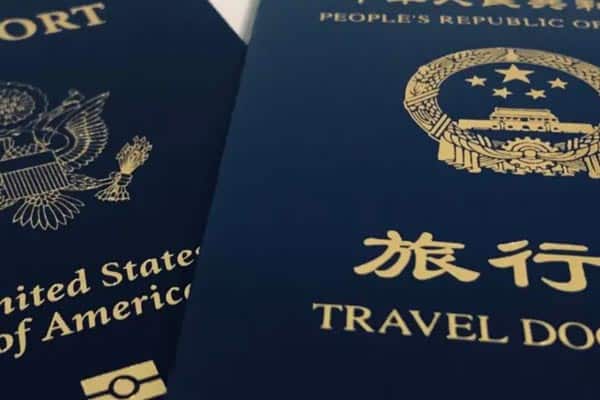
1. Differences in nationality and routing between a "travel document" and a "passport":
U.S. passports/citizenship-related materials" are often discussed in parallel with "China Travel Permits" in the U.S. Pathways, and the U.S. Department of State has clearly indicated that overseas ART/surrogacy may involve a review of evidence of citizenship.
In the path of non-citizenship-on-arrival countries, you tend to focus more on the "China Travel Permit" line, and "close the loop of documents" so that the embassy or consulate can understand it quickly.
China Consular Service website gives examples of materials and applicable circumstances for "Application for a Travel Permit for a Child Born in the U.S./Canada", and this kind of page is very crucial for practical use: you can clearly see what it requires you to prove and how to prove it.
A point that a lot of people don't think about:
Not being able to get local citizenship is sometimes more friendly to families who "want to keep their Chinese hukou/clearer path to a domestic identity" because your goal is to return your child's identity to the Chinese system, rather than tugging and pulling between the two systems.
2. Why are paternity tests often required before return?
I've seen too many families treat DNA as "do it only if you're suspicious".
The reality is more like this: when you have a slightly more complex family pattern, mode of birth, and chain of materials, DNA is the evidentiary tool that puts an end to the dispute once and for all.
Especially when:
- Complexity of parents' marital status
- Use of donor sperm/eggs
- Discrepancies between birth certificate records and domestic materials
The earlier you plan the "chain of evidence acceptable to the embassy or consulate", the less likely you are to be dragged into a black hole of time by "supplementary documents" at the last step.
VII. How to choose the right country for your legal surrogacy?
Instead of asking "which country is the best", I suggest you answer 4 questions. You'll see the answers pop up on their own.
1. 4 self-examination questions
- Identity: are you single/LGBTQ+?
This type of status is more likely to require the selection of jurisdictions that are "more interpretable in law and practice" (e.g., the United Kingdom also applies to multifamily forms, but the logic of transfer of parental authority has to be accepted; the United States depends on the state and the chain of evidence). - Budget: Are you comfortable with "higher costs for more stability" or "higher risk control for less savings"?
It's fine to save money, but don't save money on lawyers & chain of documents previews (these types of money are often more expensive in the end when saved) - Time: Are you "as fast as possible"?
Queuing type systems (typical altruistic structures) are often not suitable for time-anxious people - Nationality preference: Do you "have to be a foreigner" or "as long as the child returns home and settles in"?
The goals are different and the paths are completely different. You must read the travel pass page and material requirements ahead of time.
2. A guide to avoiding the pitfalls: 3 signs to recognize a "fake institution"
- Promising "success/gender/documentation" but failing to produce a list of verifiable medical data and documents
- Deliberately confusing "citizenship by landing" with "return travel permit" to make you think "birth is over".
- Still recommending high-risk countries or gray routes (especially underground channels in Southeast Asia)
VIII. FAQ
Q1: Are there more countries where surrogacy is legal? Why is the "list" misleading?
A: Not necessarily. The biggest problem with the list is that it only answers the question "Is there a surrogate in this country?" but not "Can you get in with this status?" "How do you get your parental rights?" "How do you get your documents back to your country?". The real delivery of cross-border surrogacy is the closing of the chain of documents, not the birth of the child.
Q2: What is the difference between "legal for nationals" and "allowed for foreigners"?
A: The difference is big enough to make you roll right over. Many countries allow their own citizens to do it within their own system, but either restrict or practically exclude foreign nationals. You will have to get your lawyer to clearly spell out "whether your nationality/marriage/family form can enter the process".
Q3: Where are singles/cisgender people most likely to get stuck doing cross-border surrogacy?
A: Usually stuck in three places: ① access (whether the clinic/law takes orders); ② parental authority documents (who is the legal parent, how to write the birth certificate); ③ embassy and consulate materials (whether the nationality/travel certificate requires additional evidence).
Q4: Why does surrogacy in the US depend on the state? What is the importance of parental rights documents?
A: The United States is a state law system. Surrogacy friendly states are more mature in terms of establishing parental rights, birth documents & hospital processes; and parental rights documents determine whether or not your subsequent licenses go smoothly. The U.S. Department of State also suggests that overseas surrogacy/ART involves a review of evidentiary materials.
Q5: Why does Canada seem safe but often slow?
A: In Canada, commercial payments are strictly limited to reimbursement of reasonable expenses within compliance boundaries, which results in scarcer surrogate mothers and longer waiting lists for matches, while parental rights and birth registration are more "post-birth procedures".
Q6: What are the risks of this "reliance on case-by-case discussions" in Colombia?
A: The risk is not in "not being able to do it", but in "having a big difference in the cases and having to make the documents harder". You need stronger lawyers to intervene and manage the consistency of documents to close the chain of parental authority and documentation.
Q7: Should I apply for a travel permit or a visa for my child to return to China?
A: Depends on your goals and nationality structure. The China Consular Service website has clear examples and a framework for applying for a travel certificate for a child born in the U.S./Canada; a common consequence of choosing the wrong path is to have to fill in the paperwork and the cost of staying in the country increases.
Q8: Why are paternity materials often requested to be supplemented?When does DNA come into play?
A: When there are discrepancies between family patterns, modes of birth, birth certificate records, and domestic materials, DNA may be the evidentiary tool to quickly end the dispute. Instead of waiting to be asked to fill in the gaps, the chain of evidence should be rehearsed at the program stage.
IX. Conclusion:
As I write this, I want to put it more bluntly:
The legal provisions are just an entry ticket. What really determines whether you can be successfully "delivered back to the country" is the practical experience and risk control ability of the organization:
- Will the pro-rights document get off the ground
- Can medical complications be handled
- Can you do the ID chain material right all at once
- And who can really carry the load when you're in an emergency situation.
If you would like, one of the most common things our MerryLife team does is to do an actionable preview of your situation based on the "3-D Assessment" in this article:
The option is not "which country is the hottest", but "which jurisdiction can close the loop on your identity, parental rights and return documents".
X. Explanation of key terms:
- Commercial surrogacy:Allow for payment and contractual binding of services/compensation within the legal framework
- Altruistic Surrogacy:Prohibition of for-profit payments in principle, usually only reasonable expense reimbursements are allowed
- Parentage:Who is the parent legally determines the name on the birth certificate and subsequent documentation
- Parental Order (UK, etc.):Legal mother at birth and subsequent transfer of parental authority by court order
- ART and the chain of evidence for surrogacy:Proof of genetic/gestational/legal paternity may be required, and DNA may be used as one of the modes of evidence.
- China Travel Permit:Applicability depends on nationality determination and consular rules; based on Consular Services website example page





 English
  简体中文
简体中文